Ozymandias and Zuckerberg
I recently returned from a family road trip around southern California—I probably don’t need to convince anyone that it’s a good trip. The national parks are their own best advertisement and the Big Sur coast has some Myst-looking vistas for sure.
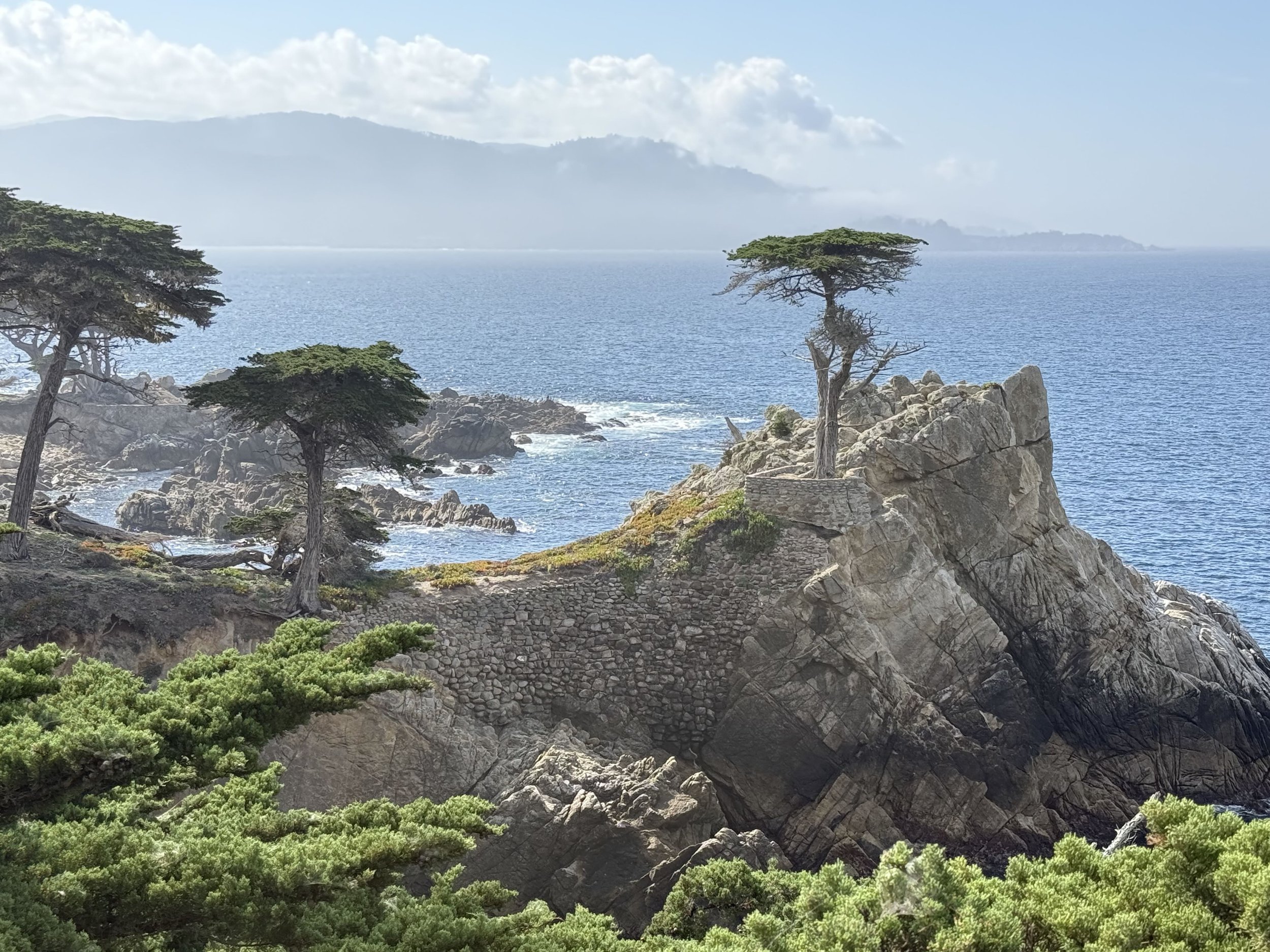
This is not, actually, a still from the 1993 computer game Myst (my photo)
One of our last stops on the trip was Hearst Castle, a lunatic mansion that the publisher, movie producer and previous-generation oligarch William Randolph Hearst assembled between 1920 and 1947. Hearst passed away in 1951 and the family donated the castle to California for (I assume) tax reasons. It’s now a museum and well worth visiting as a very striking example of what basically limitless wealth could achieve in early 20th century America.
The entire project was overseen by Julia Morgan—the first woman to graduate from the French School of Fine Arts in Paris, and a successful California architect and designer for many decades. She learned about reinforced concrete engineering and construction in Paris; her career received a boost when her buildings didn’t fall down in the 1906 San Francisco earthquake. But the castle was not a single vision; it was a true collaboration between Hearst and Morgan. Because of Hearst’s penchant for changing his mind, the site today is a palimpsest of designs, overwritten on each other. Hearst raided—or, as our tour guide put it, helped inject much needed capital into—post-WWI Europe for fine arts and architecture. He bought statues, ceilings, fireplaces, stonework, furniture, decorations and more, shipping it all to the middle of a 250,000 acre ranch on the California coast. The actual construction of the building is 20th-century reinforced concrete, but all the decorations are imported from old-world artisans. So you end up with a situation like the library shown below: atop all the bookshelves, all around the room, a line of antique Greek vases, 2,000 to 3,000 years old.
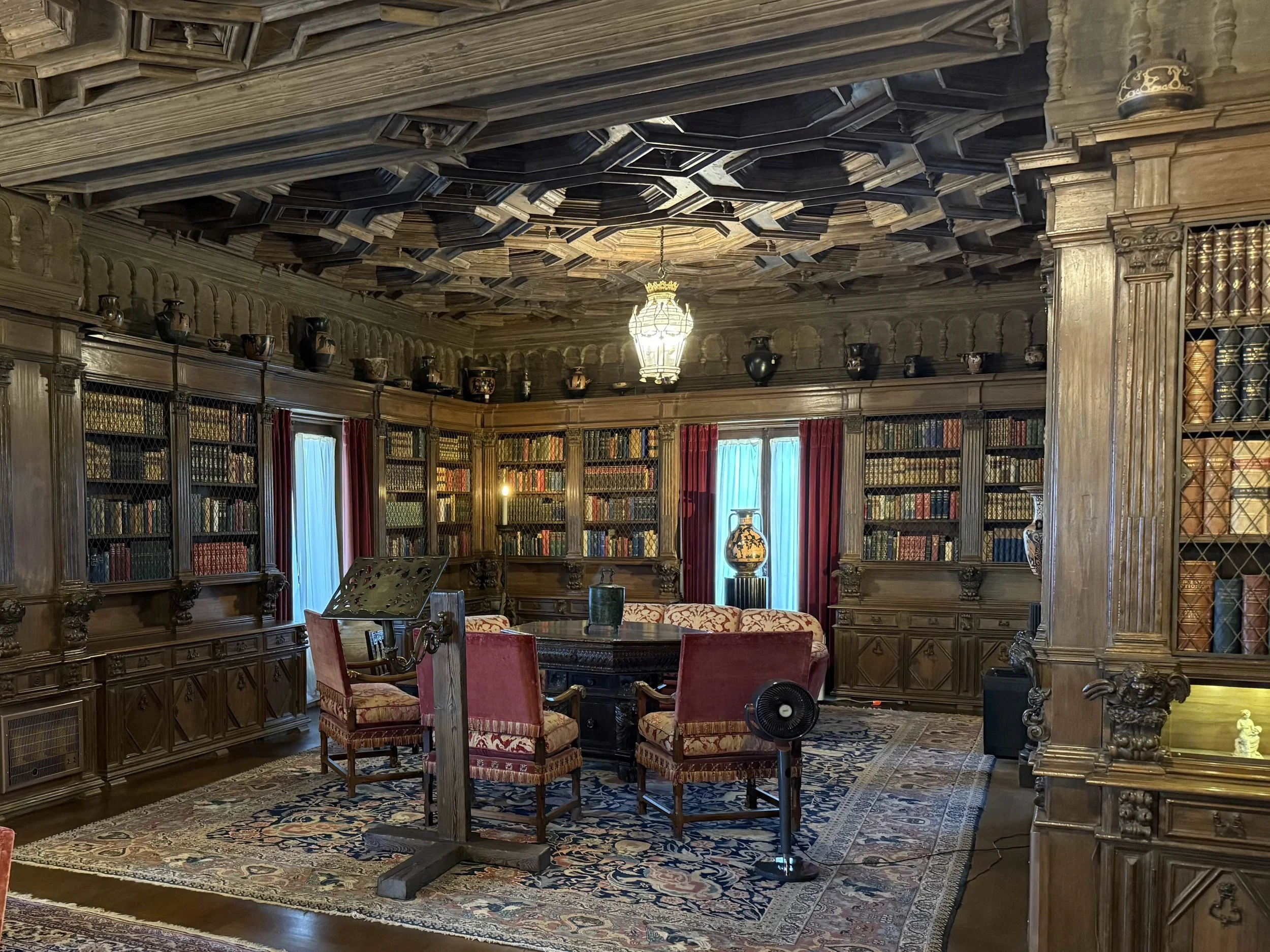
Priceless history as decorative element (my photo)
Incomprehensibly, today’s collection is what’s left over after Hearst’s finances suffered in the Great Depression. Hearst’s mistress (and possibly soulmate), the actress Marion Davies, gave him a bridge loan that averted total disaster. Overall, the build and furnishing cost about $800 million in today’s dollars, which actually struck me as surprisingly low, but of course the real answer is that this kind of project is literally impossible today. France isn’t selling Louis XIV’s tapestries at any price (besides, it can’t, because Hearst still has them).
This wasn’t just a vanity project; the castle was Hearst’s primary residence for many years. He ran his media empire from here, and it was a very active social hub despite its physical isolation. It’s a stunning place, but throughout my visit I kept thinking back to Shelley: “Look on my Works, ye Mighty, and despair!” Or to put it another way, what did it profit this man to gain the whole world?
As far as monarchical or oligarchical works go, I appreciate this one. Apart from the house and furnishings, the thousands of acres of surrounding land have been left largely undeveloped, and you can see the California coastline as it was. I don’t know if other, more recent billionaire projects will have the same legacy. 75 years from now, will my great-grandkids traipse through Zuckerberg’s Hawaiian compound or Thiel’s New Zealand bunkers? I have a hard time imagining it, not least because it seems like this generation is focusing on privacy—building monuments to exclusive, and exclusionary, taste.
But that impression might just be an artifact of time passing. Hearst’s house is a museum and a destination now, but it was built in a very remote location. With modern roads and cars, it’s still a hassle to reach. To visitors boarding the private overnight train in LA and then driving up the rutted coastal road, or descending through the marine layer clouds towards the private airstrip, it would not have seemed that the house was built with public interest in mind. Time is a solvent that dissolves intent and leaves behind only achievement. This house is both one in its own right, and a collection, by whatever means, of many others.
So I’m forced to admit that Hearst Castle, to me, both evoked Ozymandias and engendered optimism. That’s a sign of artistry right there.