“Harmless atomic bomb:” Optimism and AI
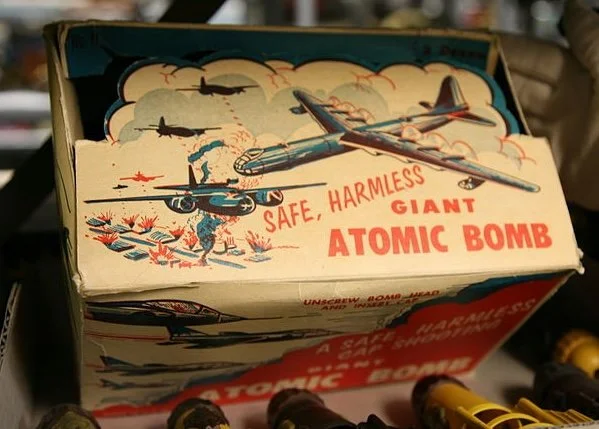
Sigh…I know I’ll never write marketing copy half so compelling (photo: Daniel Schwen)
Despite my longstanding interests in rowing, classical music, Renaissance poetry and quiet; and increasingly despite my physical appearance, I’m not actually old enough to remember the 1950s. But I’m aware of the techno-utopian thinking that permeated post-WWII America, specifically around the topic of atomic energy.
It was, apparently, an exciting time. We had defeated fascism forever! Mankind had mastered the atom! Nerds in buzz cuts and shirtsleeves had figured out how to pull nearly limitless energy from the stuff of reality itself! Atomic power had ended the War—let’s not focus too much on exactly how—and was a visible symbol of new technological promise. We were selling children’s toy sets with Geiger counters and radioactive material!
Nuclear curiosity and hope had existed for decades, as exemplified by the radioactive toothpastes and health drinks of the early 1900s. Seriously. There were a lot. But that phase was couched in ignorance about what atomic energy could actually do. In post-WWII America it seemed more plausible that nuclear energy could do anything, from powering a submarine to keeping the hands of your watch visible at all times. Lots of things were called “atomic” when they really weren’t, but lots of things really did have a bit of nuclear material or technology in them. Whether that really helped anyone is debatable, but it definitely sold some products.
You can probably see where I’m going with this. With AI, it seems like we might have moved through the “hope via ignorance” stage and straight into the “optimism via partial knowledge” stage. Today’s AI optimism reminds me of that 1950s nuclear optimism that I’m too young to remember. There’s an extremely important, literally world-changing technology heaving into view. Like pre- and post-nuclear, history will now be pre- and post-AI. This new technology has captured the public imagination. It’s being jammed into all kinds of products, even when it’s not exactly clear why. Most people don’t really understand how it works, but it means new and powerful. Its potential benefits are vast and not enormously well-understood. Its potential harms are up for vigorous debate, and are downplayed by those with an interest in dominating the emerging field. And completely independent of whatever use it’s put to, it has intrinsic harms due to how it operates and the resources it consumes. It has at least the potential to be humanity’s last invention.
I don’t know whether this comparison of nuclear tech to AI is comforting or frightening. The real answer is probably that the technologies have enough key differences—most notably AI’s potential for recursive self-improvement—to make any closer analogy pointless. Optimism has a tendency to curdle. I may not remember the tech optimism of the 1950s but I do remember the Cold War threat of nuclear annihilation that followed it. Despite that, I trend towards optimism. If nothing else, it’s useful because despair never fixed anything. Humanity’s proven ability to muddle through these issues of technological governance and adaptability isn’t entirely reassuring—past performance is not indicative of future results—but it’s also the only reason that optimism is still even an option.
This quote from Dwight Eisenhower’s 1953 “Atoms for Peace” speech seems like a good place to end: “ The United States will “devote its entire heart and mind to find the way by which the miraculous inventiveness of man shall not be dedicated to his death, but consecrated to his life.” Can I get an amen?!?